The piano plays a significant role in the Blade Runner movies. Here are my observations.
Blade Runner (original movie)
Deckard’s Piano
This piano can be seen in his apartment. It is covered with old photos and is a centerpiece for memories.

Deckard’s piano in Blade Runner stands as a profound symbol that encapsulates the complexities of his character and the film’s central themes of memory and identity. It serves as a reflection of Deckard’s emotional turmoil and his ties to the past, particularly through his interactions with Rachael, a replicant whose presence evokes a sense of nostalgia and lost humanity. As he plays, the haunting melodies resonate with his inner conflicts, particularly highlighted by the iconic unicorn dream, which poignantly questions the essence of being human.
The choice of music visible on the piano, notably Vivaldi’s Concerto in D major for Guitar, Strings and Continuo, further enriches the narrative, imbuing scenes with a deep emotional weight that enhances Deckard’s contemplative moments.
The piano is a grand piano, and visually, the piano is surrounded by photographs that not only contribute to the film’s noir aesthetic but also serve as tangible connections to Deckard’s past, including memories of his wife. These elements collectively underscore the film’s exploration of identity, reality, and the blurred lines between humanity and artificiality, making the piano a vital instrument in articulating Deckard’s journey. Ultimately, it transcends its role as a mere musical object, becoming a powerful emblem of his struggles and the film’s broader philosophical inquiries.
The piano prop in Deckard’s apartment in the film, a remarkable artifact over a century old, stands as a testament to craftsmanship and history, having undergone restoration three decades before it was used in the movie.
This piano’s rich, resonant tones evoke a sense of nostalgia, setting it apart from the sterile sounds of modern electronic replicas, and it serves as a poignant reminder of a bygone era in a world increasingly dominated by artificiality.
Based on what I’ve read, there’s no knowing what kind of piano it was. But, since C. Bechstein is referenced in the second Blade Runner movie, maybe it was a C. Bechstein.
Blade Runner 2049 (the second movie)
Deckard’s Piano
A C. Bechstein piano was in the background of a scene in Blade Runner 2049. It is in the background of Deckard’s place at the casino. It could be the same one as in the first movie. If so, then the one in the first movie would be a C. Bechstein.
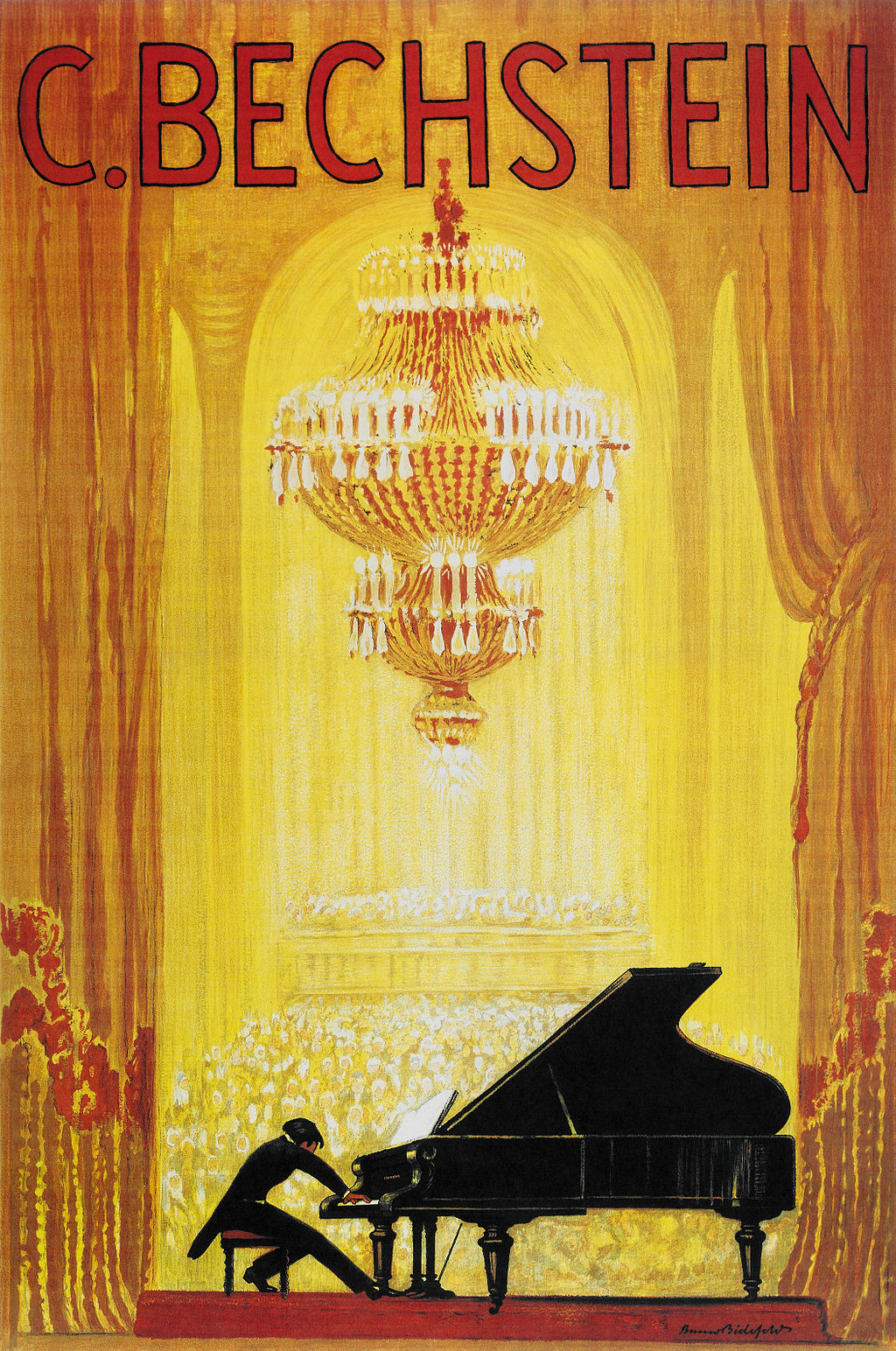
Its placement in the scene mimics very closely an old poster made by C. Bechstein (the poster is shown below).

Below is an image from the scene in the movie where you can see the piano in the background and the similarity to the C. Bechstein poster.

C. Bechstein pianos are one of my favorite pianos due to their elegant sound.
Earlier in the movie, as K walks toward where Deckard is, a piece of music is playing: Brahms, A flat major, Opus 39, no. 15. Later in the next scene K says he heard the music. The director says he chose this music specifically (see scene breakdown video below).
Sapper’s Piano
There is a piano in Sapper’s place at the beginning of the film. One key is stuck. It is the E key (image below). K tries to play it.

Later, in Deckard’s casino home, K tries to play the same key on Deckard’s piano.
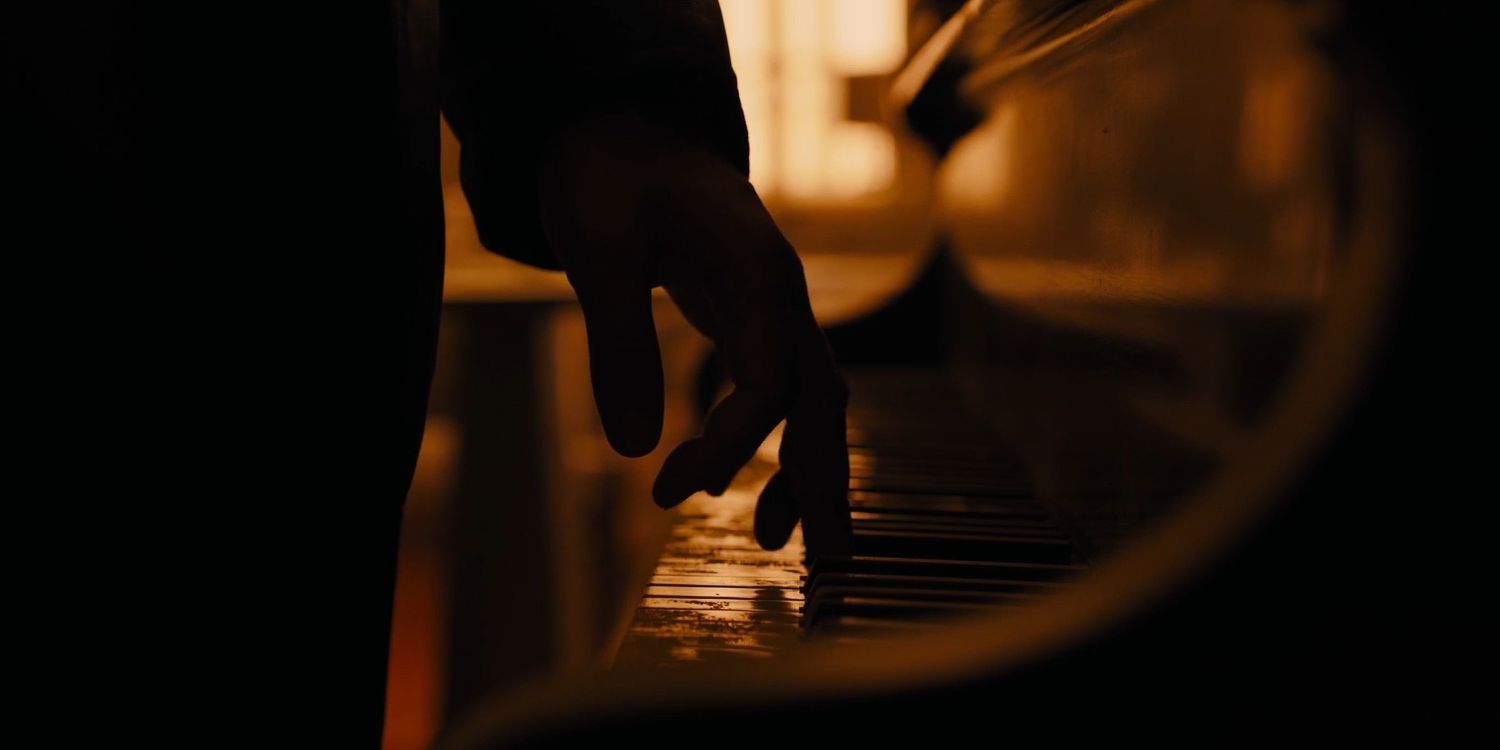
At the casino on Deckard’s piano, the note plays, but at Sapper’s, the note does not. Why does he hit this same note in both locations? There are a lot of speculations.
I think it is because, in the case of Sapper, he was a replicant, so the note did not play. But with Deckard, he’s a human, so the note played. Maybe this is symbolic of the man vs. machine dichotomy and the irony in a replicant (K, a machine) coming after a human (Deckard).
References from the book “Do Androids Dream of Electric Sheep”
In the book, pianos are not referenced, but music is.
- Chapter 9: Deckard says he likes “The Magic Flute” by Mozart.
- Chapter 9: Dekard says “You compare favorably to Schwarzkopf” to Luft.
- Chapter 12: Deckard discusses “love of music” with Phil Resch.
Also, there is the “Penfield Mood Organ,” which is not necessarily a musical instrument but could operate with sound, causing the operator’s mood to change (its purpose).
One response to “Pianos and Blade Runner Movies”
[…] I have used many piano vst plugin instruments and have a page dedicated to that: Getting Authentic Piano Sound in a VST Plugin and DAW […]