Why do you often hear Rush’s “Tom Sawyer” played before rock concerts while you’re walking into the venue and they’re testing the sound system?
It’s no coincidence that you hear this track played loudly on the sound system before concerts. It is a way of testing the punch and loudness of a sound system, and that’s why it is (or was) heard before so many concerts.

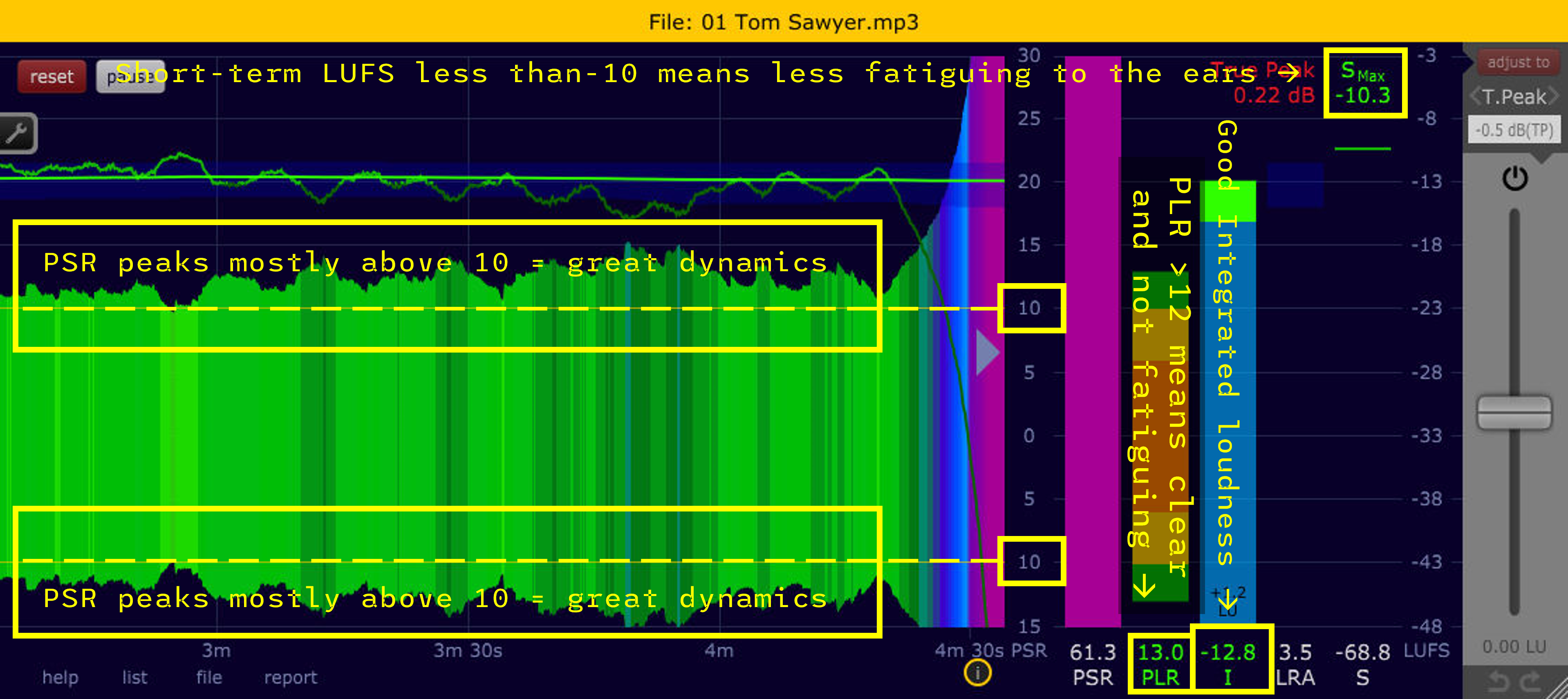
Analyzed using Multimeter by Klangfreund
- It is highly dynamic, with PSR not dipping below 10 throughout the track.
- It will also not fatigue the ears as the maximum short-term loudness is around -10 LUFS (-10.3 to be exact), which keeps it loud enough to be heard but not overly loud to desensitize the ears. Loud tracks above -10 LUFS short-term tend to desensitize hearing, and as a result, the track will not sound as dynamic and punchy even if it is.
- The integrated loudness is -12.8 LUFS, so it is reasonably loud to be competitive with other tracks.
- PLR is 13, which indicates a really good mix and a dynamic recording, but it also indicates clarity and less fatigue to the ears. PLR levels less than 10 sound less dynamic (less clear), and because the integrated loudness is often turned up to be competitive, the high integrated and low PLR combine to cause a “wall of sound” type of effect, which fatigues hearing really quickly, resulting in a flat-sounding track.

So this is probably why “Tom Sawyer” by Rush is such a well-used track when it comes to testing sound systems and why it is a good type of track to emulate in mastering if you want to achieve high dynamics, punch, clarity, and a listenable track.