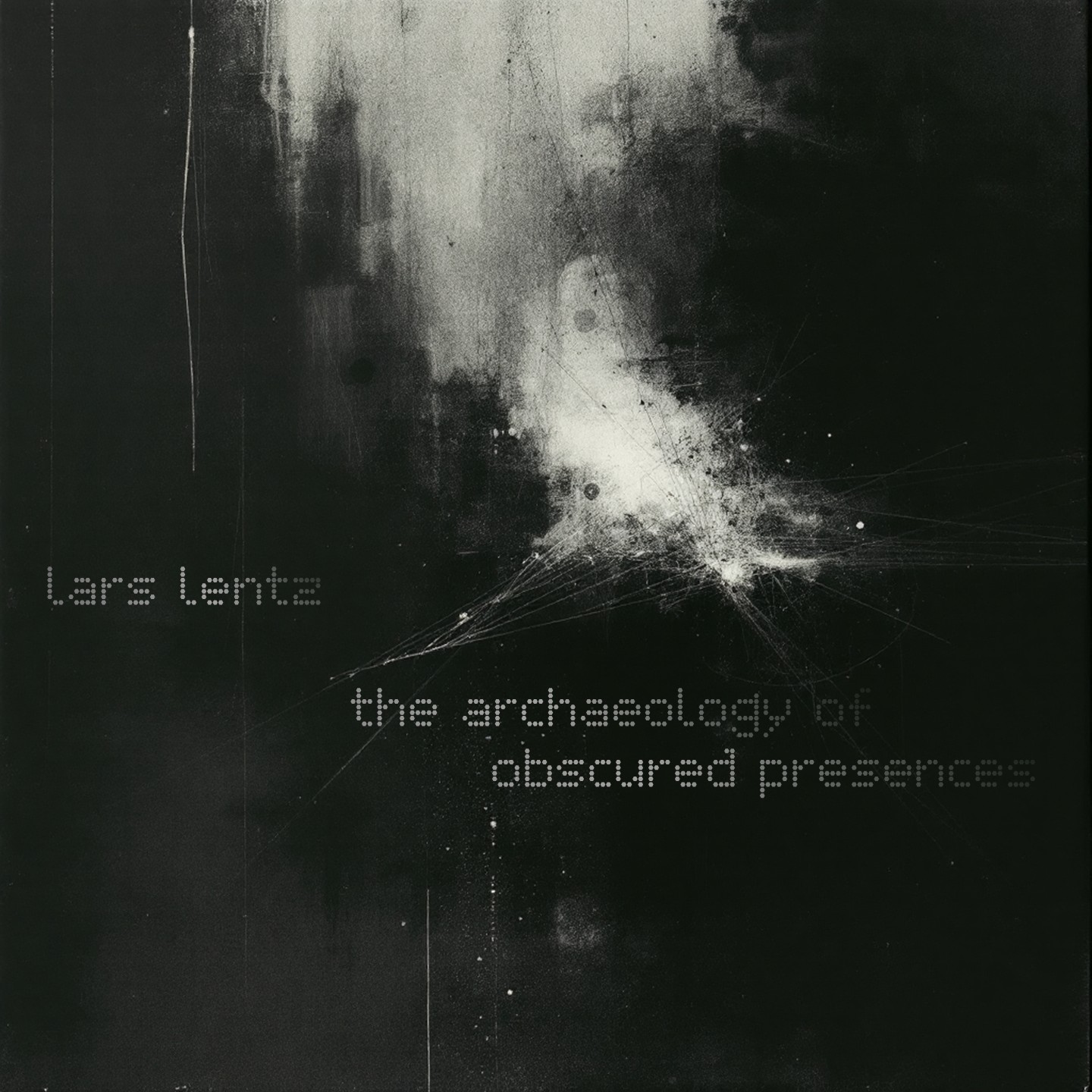
I was able to make and release an album by doing some very intentional things to my music-making process. Here’s what they are in case they could help you as well.
Getting an album’s worth of material out the door is difficult. It’s no small task. For my own music production process, I was able to identify where my barriers were and I broke them in order to relatively quickly release my latest album, “The Archaeology of Obscured Presences.”
Here’s the album (below), and you can listen to all 23 tracks right here:
Instrument and Effect Overwhelm and Dilution
I have a lot of instruments and effects. I love music so much that I get as many effects and instruments as I can so I can play around with them and listen to them. This, however, usually holds me back because I use all different instruments and effects to make tracks so each track seems really out of place with every other one and I end up with a lot of tracks that just don’t seem to go together and don’t embody my true artistic visions. This results in a diluted version of my art, meaning that it is a bit bland. I’m not releasing bland work so I don’t release anything.
To overcome this, what I did for this album was to limit myself to only a few of my very most favorite instruments and effects.
- Piano – On almost every track, I used a Pianoteq upright piano “intimate upright plus close” which I specifically modeled after two other pianos – the Cinematique Instruments Charakter Piano collection (now not available). and the Fracture Sound Woodchester Piano. I took what I liked about each of these pianos and my love of upright pianos and combined them. I also drew inspiration from Olafur Arnalds, Robert Haigh, Henrik Lindstrand, Matthew Bourne, and Nils Frahm, and their piano sounds, incorporating some of these elements into the design of my intimate upright as well. I had to adjust a lot of parameters in the piano itself and set up a special microphone configuration also.

- Drums – I went with drums by XLN Audio’s XO and Addictive Drums whenever I needed to use drums in a track. These drums are realistic but with enough character to be unique which is what I want in my compositions. I also used their Life percussion product which gave some unique organic sounds to my tracks.
- Guitar – I modeled hollow and solid body guitars in Pianoteq and used amplifiers by Overloud wherever needed. I did not have a lot of guitar in this album, but when I did I stuck to only these instruments and effects.
- Gimbri, Bass, and Oud – I used a Gimbri for some of the bass parts to give an extra special sound that is different from the traditional bass. Likewise the Gimbri on some tracks gives a nice contrast and something unique. I also used a traditional bass so as to not get to far away from the norm.

- Reverb – I used only convolution reverbs and of those, only a few. Accentize Chameleon was my convolution reverb in all instances. The impulse responses were all from real music and places, giving the instruments a very real feel. I tweaked the reverbs and used one for the piano and one for the drums that are close but have exactly the character I wanted.

- Special Delay and Reverb – Only SoundBetter effects Butterfly Effect and Halo Effect were used for the delay/echo and reverb. I developed a set of different effects for each of these plugins and varied among them as needed. These always came before the convolution reverb in my effect chains.

- Other Effects – Unfiltered Audio, Cableguys, Goodhertz, and Olhorst were among the other effect brands used in some particular tracks and only as needed.
- Envelope Shapers – A cross between transient designers and reverb enhancers, the only envelope shaper I used on my instruments was Sonnox Envolution.

- Analog – To make the tracks all sound like they were processed through analog gear, Sketch Cassette was used with three different presets I developed.
- Mix and Master Bus Chains – These were exactly the same for every track and emphasized transparency and warmth. Tokyo Dawn Labs, Millenia Media, Vertigo Sound, Sonnox, Soundtheory, Klanghelm, and ProAudioDSP were the brands used.
Perfectionism
I noticed that I was forever tweaking my tracks to get the levels right, the sound just right, and the feel where I wanted it. This ruined my tracks.
By continually tweaking tracks, I would lose the original feel and intent of them and end up with a version that was just not me. Then I would try to get back to the original feel and never make it. Consequently, I would not release the track.
Often the first version of a track is 90% there in terms of quality. So what I did was lay down the track then only tweak it once or twice before rendering it for release. This beat my perfectionism to death and I was able to get tracks actually done.
Album Incoherence
I always have a lot of different-sounding tracks that don’t seem to go together. As a result, I don’t release anything because the tracks I have don’t seem to make up a coherent album of any kind.
To combat this, and actually eliminate it all together, these things were key:
- I limited my instruments and effects as described above. This alone caused the tracks to have a similar vibe. I sprinkled a few others in that were on the outer bounds of my sound, and these gave a nice contrast throughout the album.
- I created an album theme and then, only afterward, wrote up some backstories for each track that seemed to go with my album theme. I collaborated with AI for these stories and then took the resulting ideas and made these backstories my own. So afterward, I now had every track with a story that went with the theme of my album. This was now in perfect alignment with my artistic vision so there was no barrier to release.
Names for the Album and Tracks
I hate trying to come up with names for albums and tracks. To get over this hurdle, I first did the hard part of coming up with an overall album concept.
For this album, it was the thought of things in the real world that are unseen and maybe there but we cannot see them or we don’t notice them. This focused the album on “noticing.” This allowed me a lot of freedom to explore this concept.
Now, with an album concept, I was able to name the album. This took some time and I tried out various ideas before settling on “The Archaeology of Obscured Presences,” which implies “unearthing” these sounds and presences (Archaeology), which is what every track on the album does.
Naming tracks was harder. I had ideas of what they were about, but I also realized they could be interpreted differently by different people. The last thing I want is to impress my beliefs and ideas on others. I would rather have my listeners form their own ideas while listening to my tracks. Therefore, I opted to go a couple of different routes.
I described my track to an AI and let it come up with a bunch of ideas of what the track name should be and a backstory. From this, I made it my own, rewrote it, and chose what resonated with me and my album concept. I often drew upon both visual and emotional aspects. Previously, I was focused more on the visual, but this time I focused more on feelings. I want this album and tracks to feel personal to others as it did to me.

Track names often guide the listener, and in almost all cases, I wanted that to be more vague and leave the interpretation of the track up to the listener. So instead of naming the tracks all in a conventional way, I used lowercase for some, implying an uncertainty and minimalism about the track names. Additionally, I combined letters and numbers to name some of these in a style reminiscent of Aphex Twin or Deadmau5.
I’m Not Ready
I never feel “ready” to release an album. I just pushed the button on Bandcamp a few minutes ago as I am writing this. But not feeling “ready” is just another excuse to allow fear to win.
I embraced a “release before ready” concept this time. I’ll never feel ready, so I took a leap. What’s the worst that can happen anyway?
“Ever notice that ‘What the hell’ is always the right decision?”
—shrewd observation, attributed to an unknown Hollywood scriptwriter
